
What Is Zero-Click Search?
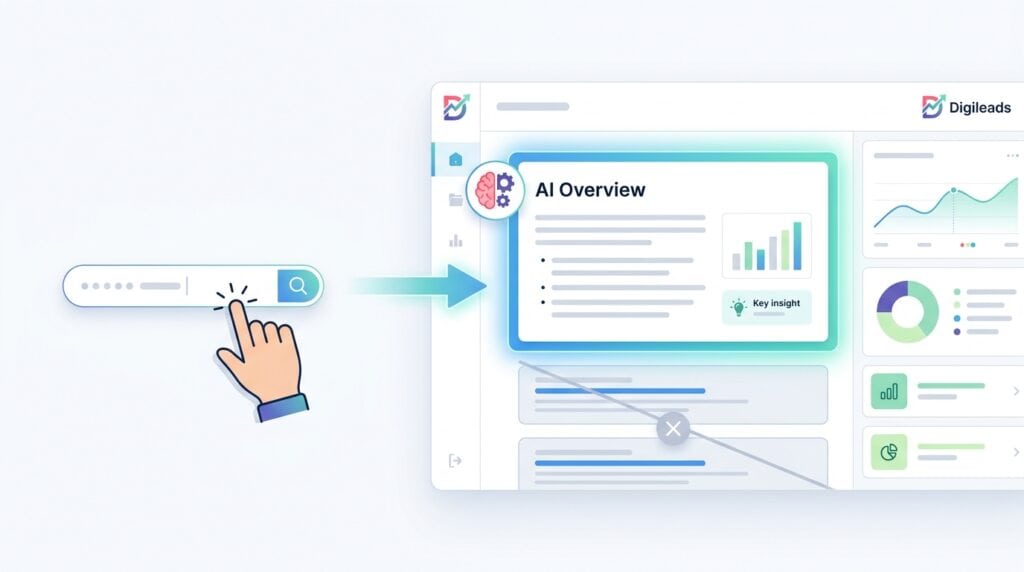
If you’ve ever typed a question into Google and got your answer without clicking a single result, you’ve experienced what is zero-click search firsthand. A zero-click search occurs when the search engine resolves a query entirely on the results page itself, through an AI Overview, a featured snippet, a knowledge panel, a local pack, or a direct answer box, so the user gets what they need without ever landing on a website.
This isn’t a fringe behaviour. It’s now the dominant pattern for a substantial proportion of all searches conducted on Google. And for businesses that have built their digital strategy around organic traffic, it represents one of the most significant structural shifts in search since the introduction of PageRank.
Understanding zero-click results isn’t about panic, it’s about precision. The businesses that grasp this shift early will adapt their content strategy accordingly. Those that don’t will watch their traffic stagnate whilst wondering why their rankings aren’t converting.
The Scale of the Zero-Click Phenomenon
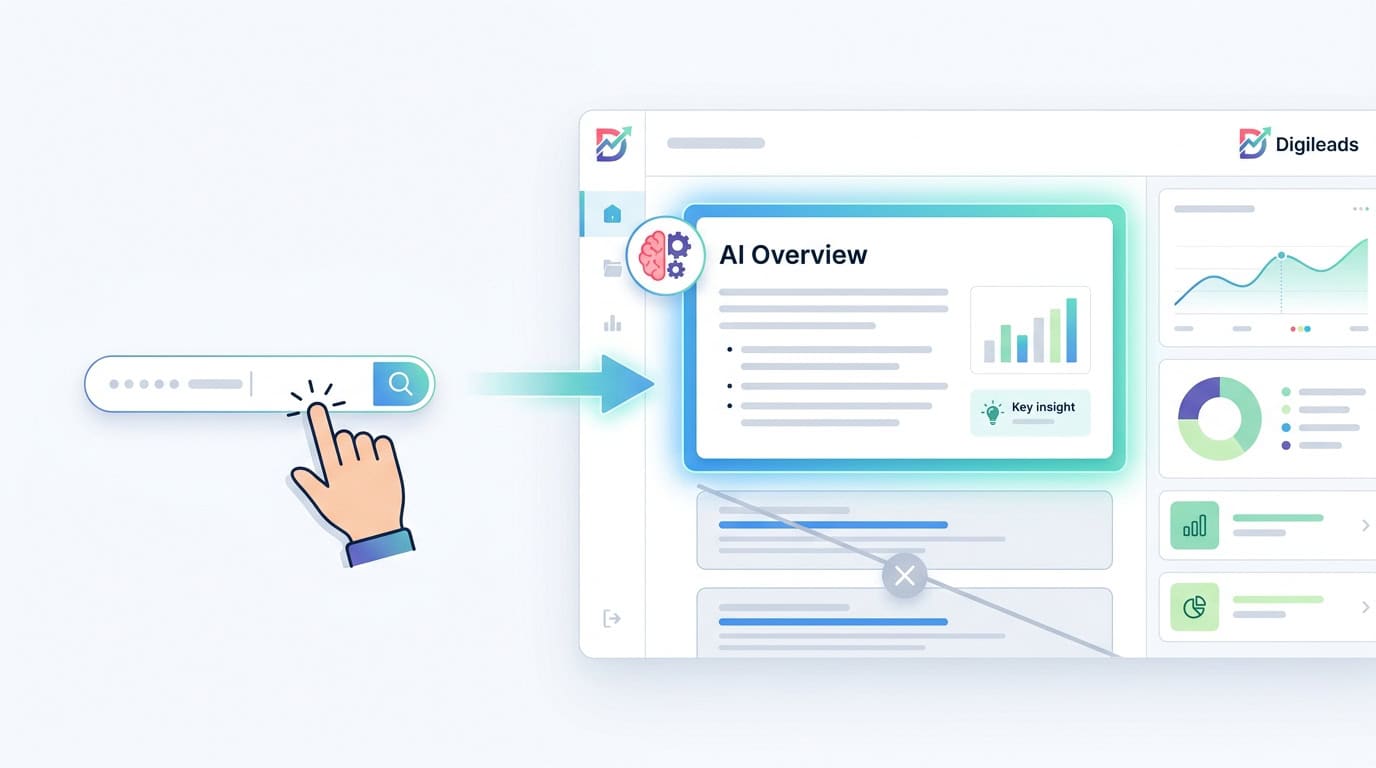
The rise of no click searches has been building for years, accelerated sharply by the rollout of Google’s AI Overviews in 2024. These AI-generated summaries sit above traditional organic results and synthesise answers from multiple sources, often answering the query so completely that further investigation feels unnecessary to the user.
Combine AI Overviews with the established formats that already captured zero-click traffic, featured snippets, knowledge panels, People Also Ask boxes, weather widgets, sports scores, currency converters, and local map packs, and it becomes clear that the search results page has transformed from a directory of links into a destination in its own right.

Many businesses tracking their Google Search Console data have noticed a telling pattern: impressions holding steady or even rising whilst clicks decline. This is the zero-click fingerprint. Your content is being seen. It may even be contributing to an AI Overview or featured snippet. But the click, the metric that once defined success, never materialises.
Which Query Types Are Most Affected?
Not all searches are created equal in a zero-click environment. The queries most vulnerable to zero-click results tend to share common characteristics:
-
Factual or definitional queries — “What is the capital of France?” or “What does AEO stand for?” are resolved instantly by Google without any need for a click.
-
Calculation and conversion queries — currency exchange, unit conversions, percentage calculations.
-
Weather and time queries — almost always answered directly in the SERP.
-
Local intent queries — “dentist near me” triggers a local pack that satisfies many users without a website visit.
-
How-to and comparison queries — increasingly absorbed by AI Overviews that pull structured answers from multiple sources.
This is where an important distinction must be made. Many zero-click searches were never high-intent commercial queries in the first place. Someone checking tomorrow’s weather or converting miles to kilometres was never likely to become a customer. Losing that traffic carries minimal commercial consequence.
The concern, and the genuine strategic challenge, is when zero-click results begin absorbing queries that do carry commercial intent. “Best CRM software for small businesses.” “How to generate leads for a construction company.” “What is answer engine optimisation?” These are the searches where a lost click represents a lost opportunity to build a relationship, demonstrate expertise, and move a prospect along the buying journey.
Zero-Click Search SEO: Rethinking What Visibility Means
The traditional equation in SEO was straightforward: rank higher, get more clicks, drive more traffic, generate more leads. Zero-click search SEO requires a more sophisticated framework, one where visibility is decoupled from clicks, and where brand presence in AI-generated answers becomes a performance metric in its own right.
Consider what happens when your brand’s content is cited within a Google AI Overview. The user receives an answer. They may not click. But they’ve been exposed to your brand name, your framing of the problem, and your authority on the subject. Over time, that repeated exposure builds the kind of familiarity that influences purchase decisions — even when there’s no direct click to attribute it to.
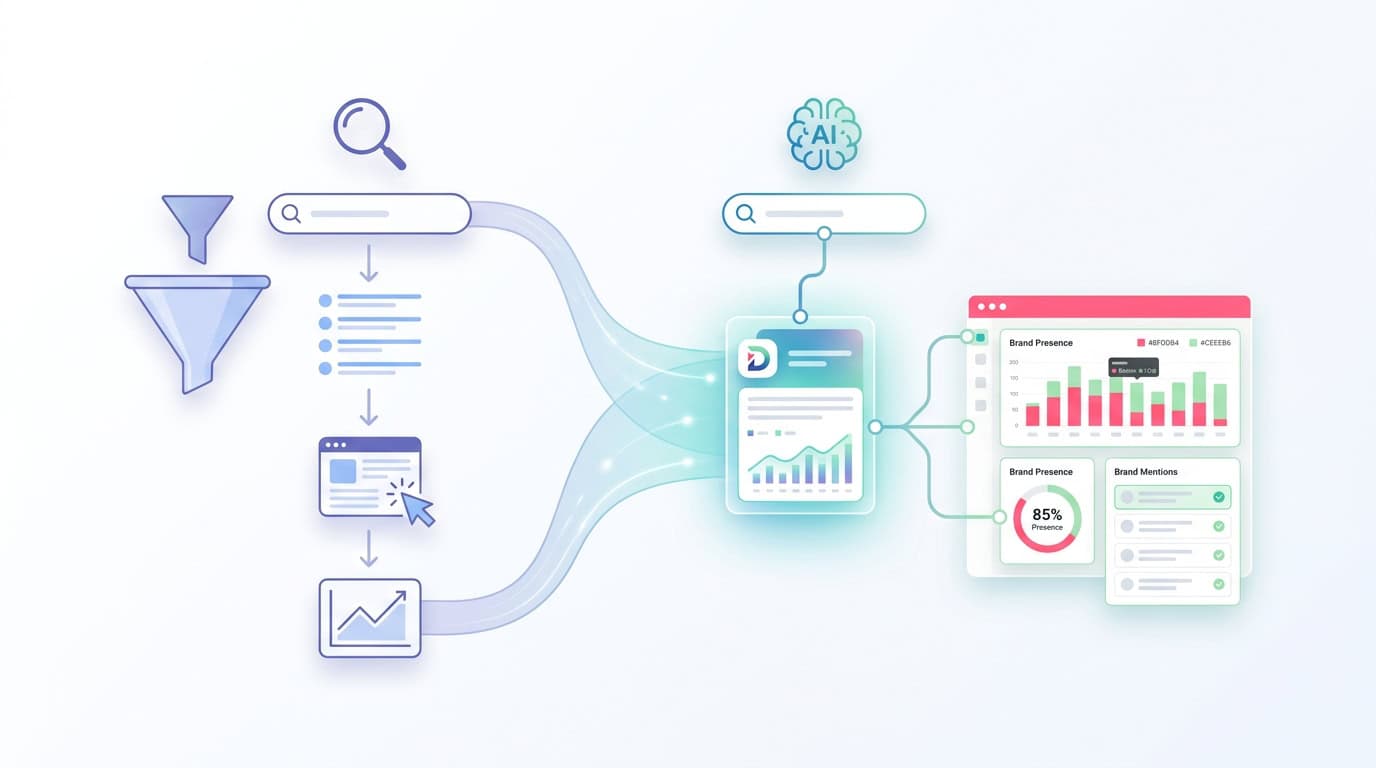
This is sometimes called zero-click brand building, and it’s one of the more counterintuitive realities of modern search. Appearing in the answer, even when no click follows, is a competitive asset. Not appearing at all, even for your core topics, is a vulnerability.
The Attribution Problem
One of the practical headaches created by no click searches is attribution. How do you measure the value of appearing in a featured snippet that doesn’t generate a click? How do you quantify brand authority built through AI Overview citations?
Standard analytics platforms are not built to capture this. Google Search Console shows impressions and clicks, but it doesn’t tell you how often your content shaped an AI-generated answer, or how many users saw your brand name in a knowledge panel. Businesses relying solely on last-click attribution models will systematically undervalue their content’s contribution to awareness and consideration.
The response isn’t to abandon measurement — it’s to broaden it. Track branded search volume over time. Monitor your share of voice in AI Overviews for priority topics. Measure direct traffic and assisted conversions alongside organic clicks. Build a more complete picture of how search exposure influences behaviour across the full buying journey.
What Zero-Click Results Mean for Content Strategy
If zero-click search is changing what visibility means, it follows that content strategy must change too. Here’s where the practical implications become actionable.
Structure Content to Win the Snippet — Even Without the Click
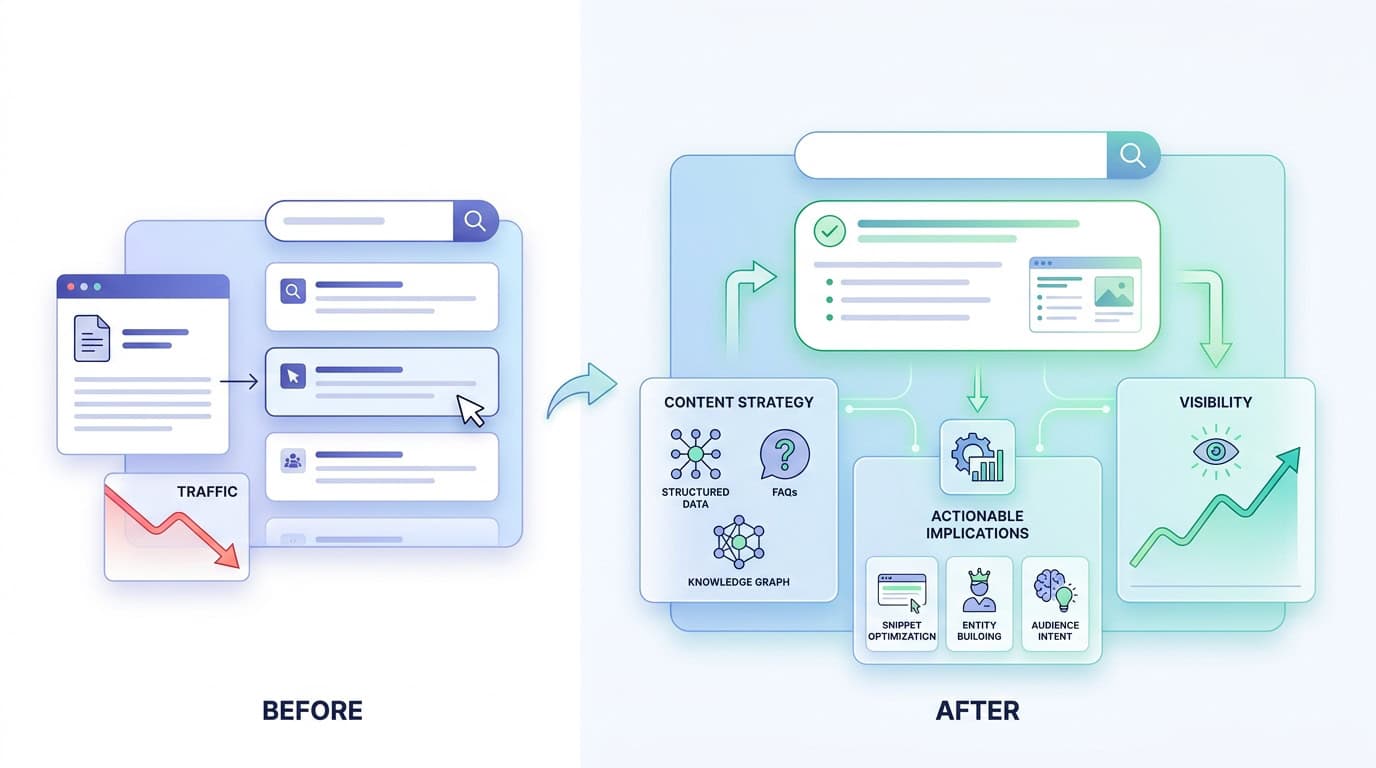
Featured snippets and AI Overviews don’t pull from thin air. They draw on content that is clearly structured, directly answers specific questions, and demonstrates authoritative depth on a topic. Writing content that is structured for snippet capture — with concise definitions, numbered steps, comparison tables, and clear headings — increases your chances of being the source that Google surfaces.
This approach to content is at the core of Answer Engine Optimisation (AEO), a discipline focused on making your content the authoritative source that AI systems and search engines pull from when constructing direct answers. AEO is not a replacement for traditional SEO; it’s the evolution of it.
Build Topical Authority Across Your Niche
In a zero-click world, scattered content across disconnected topics is a losing strategy. Search engines — and the AI systems that power them — reward brands that demonstrate deep, consistent expertise within a defined subject area. Building a content ecosystem that comprehensively covers your core topics, and links those pieces together coherently, signals the kind of authority that earns placement in AI Overviews and featured snippets.
This is closely tied to Generative Engine Optimisation (GEO) — the practice of structuring and positioning your content so that generative AI systems, including Google’s AI Overviews and tools like ChatGPT and Perplexity, recognise and reference your brand as a credible source.
Prioritise Depth on High-Intent Topics
If low-intent queries are increasingly resolved without a click, the commercial imperative shifts toward owning the territory around high-intent searches. These are the queries where a user is actively researching a decision, comparing options, or seeking a solution to a specific business problem. Content that genuinely addresses those queries with depth and specificity — not surface-level answers that mirror what Google could synthesise itself — is what drives the clicks that matter.
Think about what your prospective customers are searching for when they’re close to a buying decision. Those queries deserve your best content: comprehensive, authoritative, and structured to serve both the reader and the algorithm.
Understand How Google’s AI Overviews Select Sources
Not every piece of content earns a place in an AI Overview. Google’s systems favour sources that are authoritative, well-structured, and consistent in their expertise. Understanding how Google AI Overviews work, and what signals they use to select and synthesise content, is essential context for any business serious about maintaining visibility in a zero-click environment.
Zero-Click Search Isn’t the End of SEO — It’s a Redefinition
There’s a temptation to read zero-click trends as a death knell for organic search as a channel. That reading is too simplistic. Search remains the primary mechanism through which people discover solutions to problems, and most commercial searches, particularly those made by buyers in the consideration and decision stages of a purchase journey, still result in clicks to websites.
What zero-click search does demand is a more sophisticated approach to what success looks like. Clicks remain important. But so does presence. So does authority. So does the ability to be the brand that shows up, in snippets, in AI answers, in knowledge panels, consistently and credibly across the topics that matter to your audience.
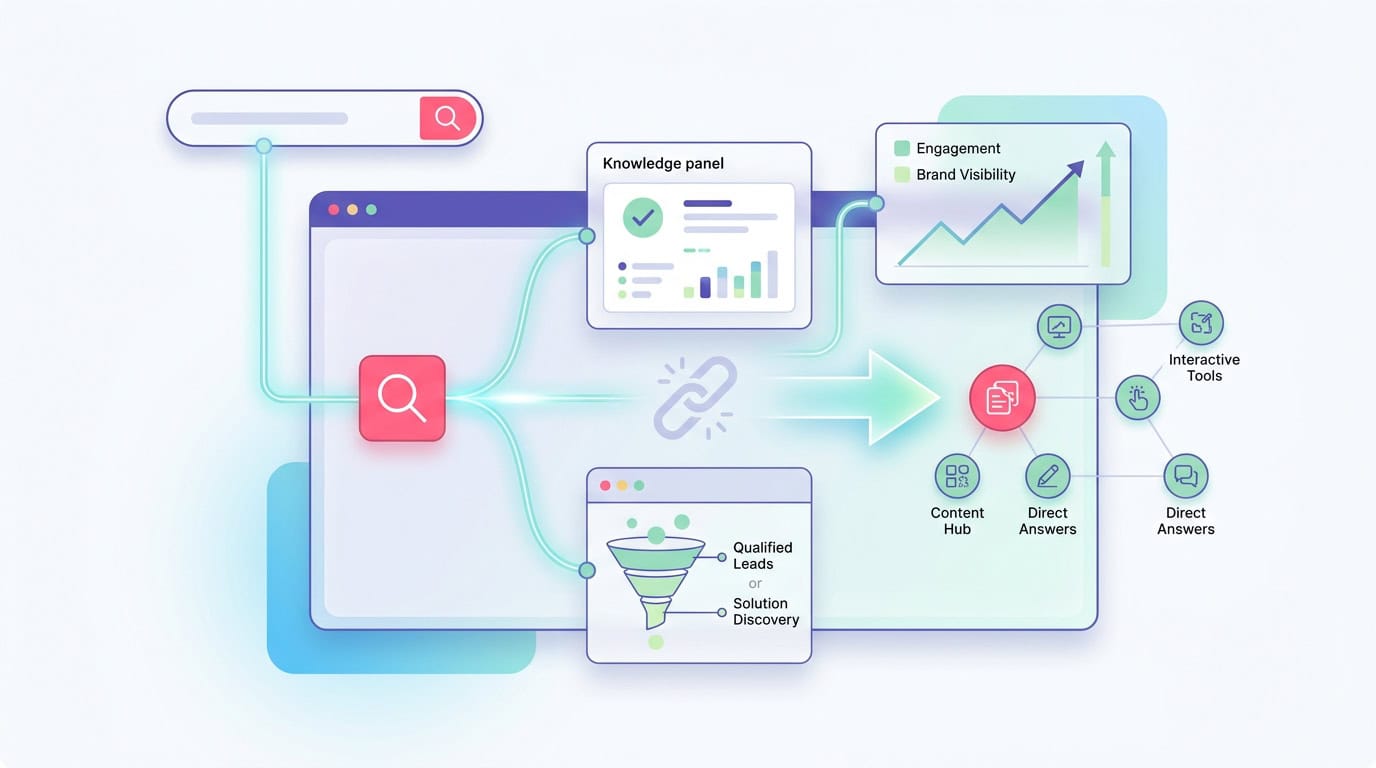
Businesses that measure SEO performance by traffic alone will make poor strategic decisions in this environment. Those that measure visibility, brand authority, and influence across the full search experience will be better positioned to compete, and to convert, when the click does come.
How Digileads Approaches Content in a Zero-Click World
At Digileads, we build content strategies that account for the realities of modern search, not the assumptions of five years ago. That means structuring content for AI Overview inclusion, building topical authority clusters that signal deep expertise, and helping clients understand that brand visibility in search results is a commercial asset, even when it doesn’t produce an immediate click.
We work with business owners and sales leaders who need their digital presence to generate real pipeline, not just traffic metrics that look impressive in a spreadsheet. Zero-click search changes the game, but it doesn’t change the objective: get in front of the right people, with the right message, at the right moment.
If your current SEO strategy was built for a search landscape that no longer exists, it’s time to update it.