
What Is GEO? A Clear Definition
Generative Engine Optimisation (GEO) is the discipline of optimising your content to appear within the generated responses of AI-powered search engines, including Google’s AI Overviews, Bing Copilot, and Perplexity. If you’ve searched for something recently and seen a synthesised, conversational answer at the very top of the results page before a single blue link appears, you’ve already encountered the type of output that GEO is designed to influence.
Understanding what GEO is matters because the rules of search visibility are changing fast. The search engines your customers use every day are no longer just indexing and ranking pages, they’re reading, interpreting, and summarising them. That shift fundamentally changes what it means to be visible online.

GEO vs SEO: What’s the Difference?
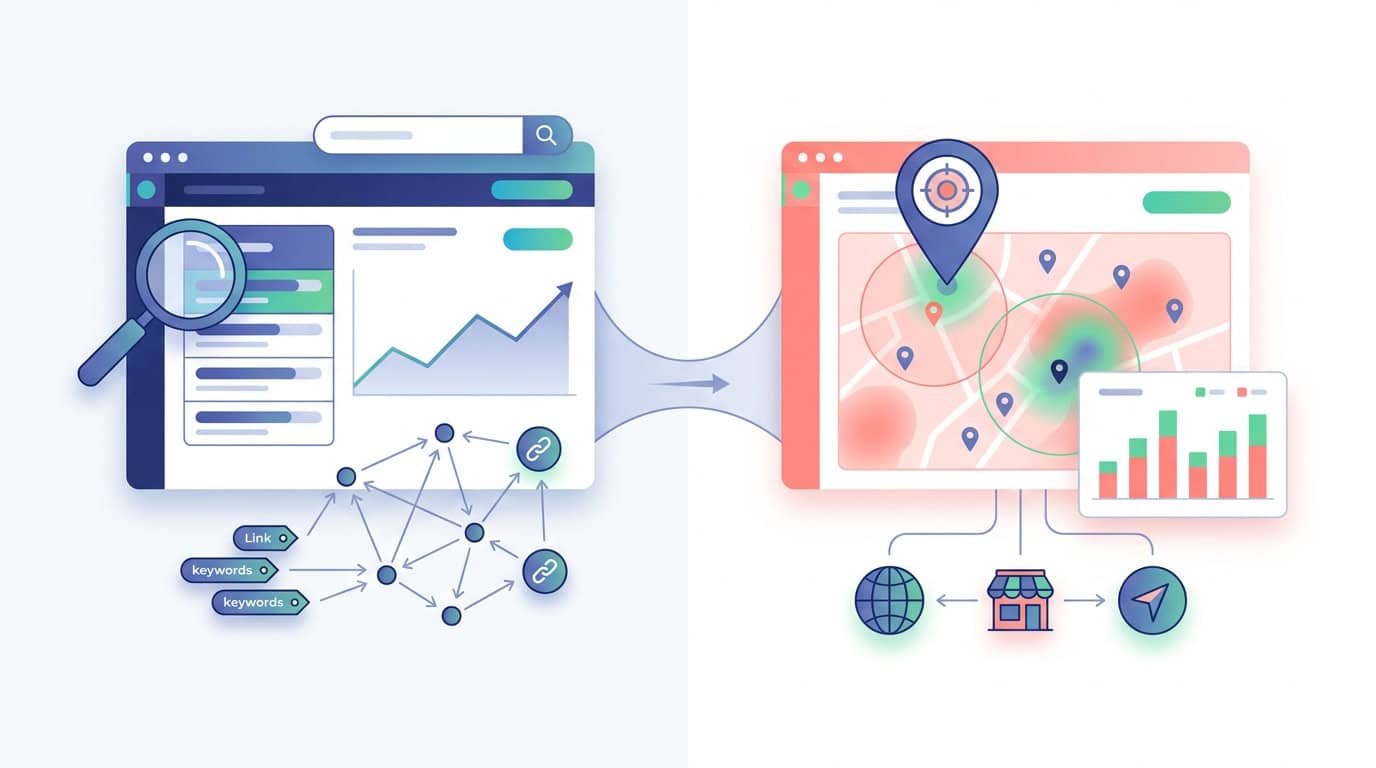
Traditional SEO (Search Engine Optimisation) has always been about earning ranked positions in the organic listings — those familiar blue links that appear after you submit a query. You optimise your pages for relevant keywords, build authority through backlinks, and work to climb the rankings so that more users click through to your site.
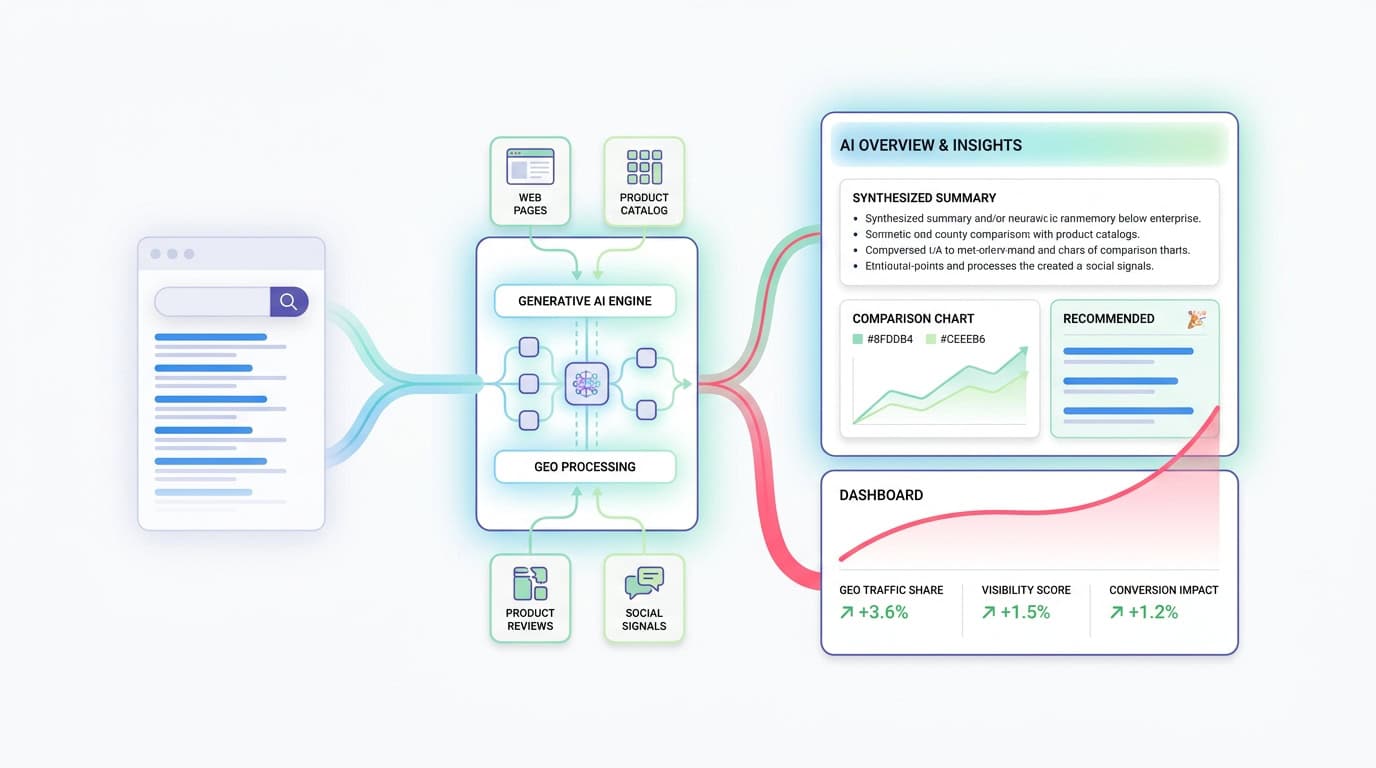
GEO operates in a different space entirely. Rather than competing for a position in a ranked list, you’re competing to be included in the AI’s synthesised response. The AI doesn’t simply link to your page — it reads your content, extracts the most relevant and credible information, and weaves it into a conversational answer. Your brand might be cited, quoted, or paraphrased — or it might be ignored completely in favour of a competitor whose content was better structured, more authoritative, or easier for the AI to interpret.
The practical implication is significant. When an AI Overview answers a query, many users get what they need without ever scrolling down to the organic listings. That means the traditional click-through model is being disrupted. Businesses that only focus on ranking for blue links are increasingly at risk of becoming invisible to a growing segment of their audience.
Key Differences at a Glance
- Traditional SEO: Targets ranked positions in organic search results; success is measured by ranking position and click-through rate.
- GEO: Targets inclusion within AI-generated responses; success is measured by whether your content is sourced, cited, or surfaced by the AI engine.
- Goal: SEO earns you a link. GEO earns you a voice inside the answer itself.
GEO vs AEO: Understanding the Distinction
GEO is also frequently confused with AEO (Answer Engine Optimisation), and while the two disciplines are closely related, they are not the same thing. AEO focuses on being cited as the direct, singular answer to a specific question — typically in features like Google’s Featured Snippets, People Also Ask boxes, or voice search responses. AEO is about owning the single best answer to a clearly defined question.
GEO is broader in scope. AI-generated responses don’t just pull one source — they often synthesise information from multiple sources to construct a nuanced, comprehensive answer. Generative Engine Optimisation is therefore about ensuring your content is credible, well-structured, and authoritative enough to be part of that wider synthesis. You might not be the only source cited, but you want to be one of them.

Think of it this way: AEO is about being the definitive answer. GEO is about being a trusted contributor to the conversation.
Why GEO Is Becoming a Critical Traffic and Visibility Channel
The rise of generative AI in search isn’t a distant trend — it’s already reshaping how people find information, compare products, and make purchasing decisions. Google’s AI Overviews are now visible to users across many markets. Bing Copilot integrates generative responses directly into the search experience. Perplexity has attracted a fast-growing user base of professionals who prefer synthesised answers over link-browsing.
As these generative results take up more prime real estate at the top of the search experience, the organic listings below them receive less attention. For businesses that rely on organic search traffic, this is a direct commercial concern. The question is no longer whether to think about GEO — it’s how quickly you can build the kind of content and authority that AI engines trust.
Who Is Most at Risk of Being Left Behind?
Any business whose customers use search to research, compare, or validate purchasing decisions is exposed to this shift. This includes:
- B2B companies whose buyers research solutions before engaging a sales team
- Professional services firms whose prospects search for guidance and expertise
- E-commerce businesses whose products are compared and evaluated through search
- Lead generation businesses where search is a primary acquisition channel
If your audience is searching, and AI is answering before they reach your site, your pipeline is at risk unless your content is part of what the AI is drawing from.
What GEO Doesn’t Replace
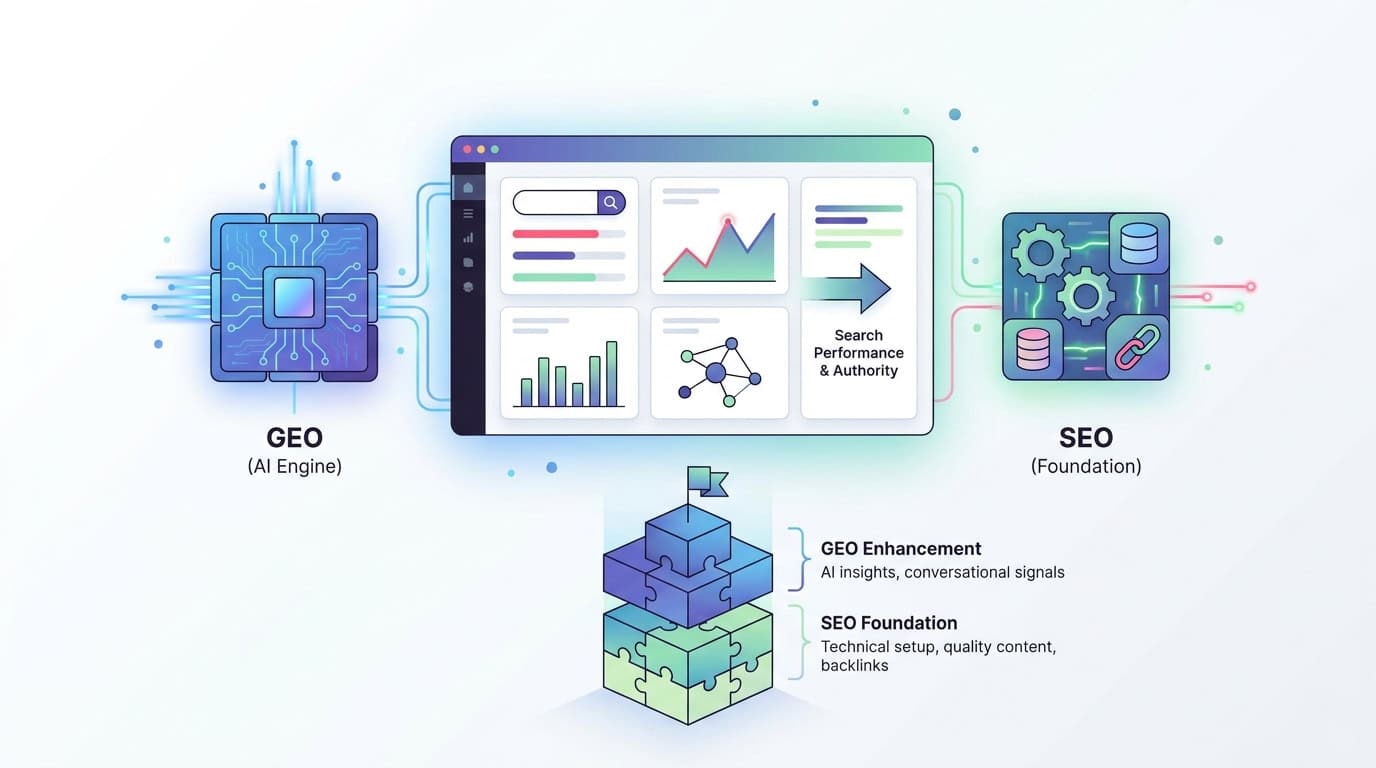
It’s worth being direct about this: GEO is not a replacement for SEO. Strong technical foundations, quality backlinks, and well-optimised pages remain essential. In fact, the content signals that make you competitive in traditional organic search, authority, relevance, quality, are largely the same signals that make you competitive in generative AI results. The two disciplines reinforce each other.
The businesses that will perform best in the years ahead are those that treat GEO, AEO, and traditional SEO as complementary layers of a unified visibility strategy — not as competing priorities.
Actionable Takeaways
- Audit your existing content for clarity, structure, and depth. If it wouldn’t make sense to a highly capable reader skimming for the best answer, it won’t perform well in generative AI responses.
- Map your content to genuine questions your audience asks. Use tools like People Also Ask, search autocomplete, and customer conversations to identify what those questions actually are.
- Invest in topical authority by building out content clusters around your core subject areas rather than publishing isolated, one-off articles.
- Implement structured data across your site to give AI engines cleaner, more confident signals about your content.
- Track your AI visibility by regularly searching queries relevant to your business and noting whether your brand appears in AI Overviews, Bing Copilot responses, or Perplexity answers.
The Bottom Line on What GEO Means for Your Business
Generative Engine Optimisation is not a speculative future concern — it is a present, practical challenge for any business that depends on search visibility. The AI engines your customers are already using are making decisions about whose expertise to surface and whose to ignore. Those decisions are influenced by the quality, structure, and authority of your content.
The businesses investing in GEO now are building a durable advantage. Those waiting for the landscape to settle are ceding ground to competitors who are already showing up inside the answers their shared audiences are receiving.
Understanding what GEO is is the first step. Building a strategy that puts your brand inside those answers is where the real opportunity lies.
Ready to build a content strategy that performs in both traditional search and generative AI? Talk to the Digileads team today and find out how we can help you become the most visible, most trusted voice in your market.