
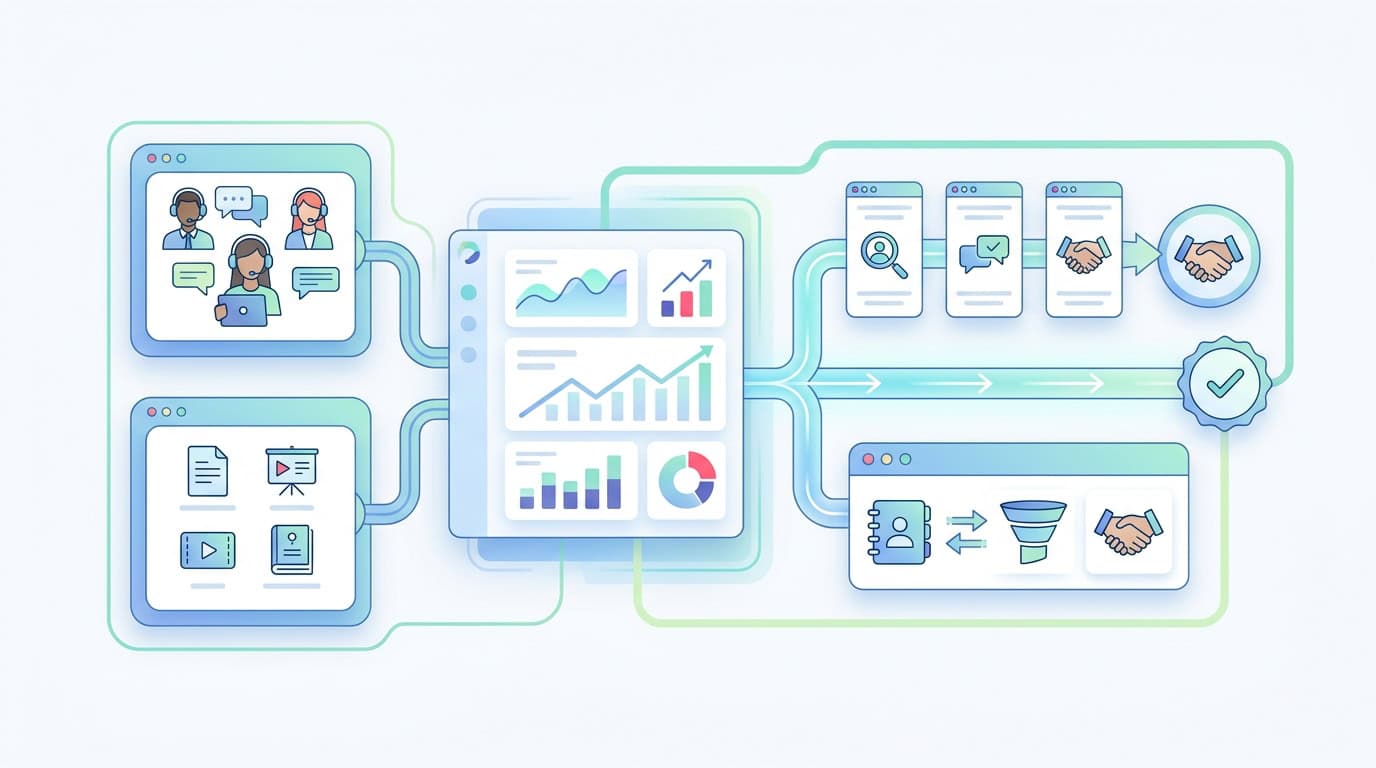
What Is a Sales Enablement Strategy?
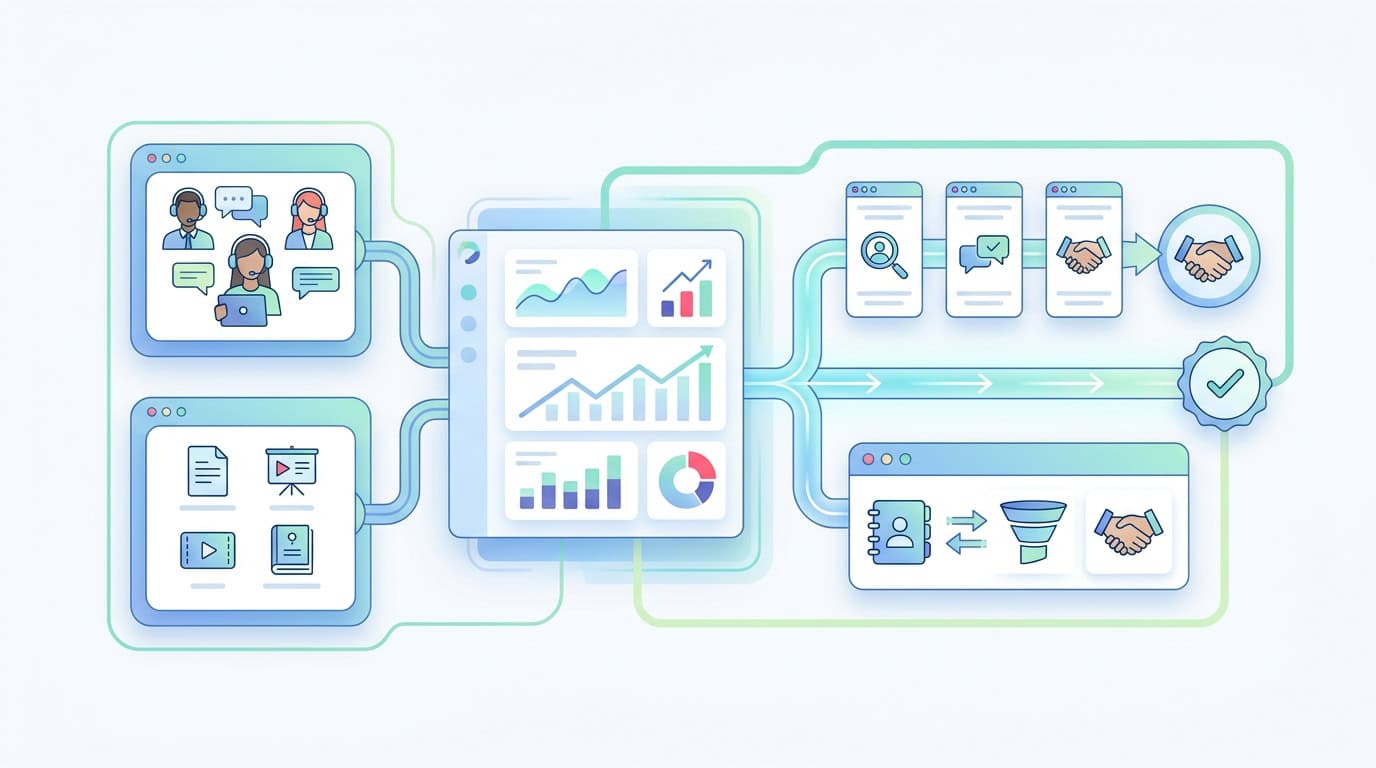
A sales enablement strategy is a structured approach to equipping your sales team with the resources, processes, information, and technology they need to engage buyers effectively and close more deals. It sits at the intersection of people, content, and systems — and when it works, it removes the friction that slows your pipeline down and costs you revenue. For mid-market B2B businesses in particular, a well-executed sales enablement strategy is often the difference between a team that consistently hits quota and one that perpetually falls short.
If you’ve ever wondered why some sales teams seem to convert with confidence while others grind through their pipeline with little to show for it, the answer is almost always structural. It’s not that your reps lack talent — it’s that they’re operating without the right foundation beneath them.
Why Sales Enablement Matters for B2B Teams Right Now

Sales enablement for B2B isn’t a luxury reserved for enterprise businesses with large revenue operations teams. Mid-market companies face the same challenges at a different scale: longer sales cycles, multiple decision-makers, and buyers who are more informed — and more sceptical — than ever before.
One of the most consistent problems we see is poor lead quality eroding sales performance. When reps spend the majority of their time chasing unqualified leads, their conversion rates suffer, morale drops, and the pipeline becomes a vanity metric rather than a reliable forecast. Many businesses find that the root cause of missed quota isn’t sales skill — it’s the quality and readiness of the leads being handed over.
A strong sales enablement strategy addresses this directly. It doesn’t just train your team — it rebuilds the engine that feeds them.
Want a broader view of the business case? Read our guide on how sales enablement will improve your sales team to understand the full commercial impact.
The Digileads Framework: A Step-by-Step Sales Enablement Strategy
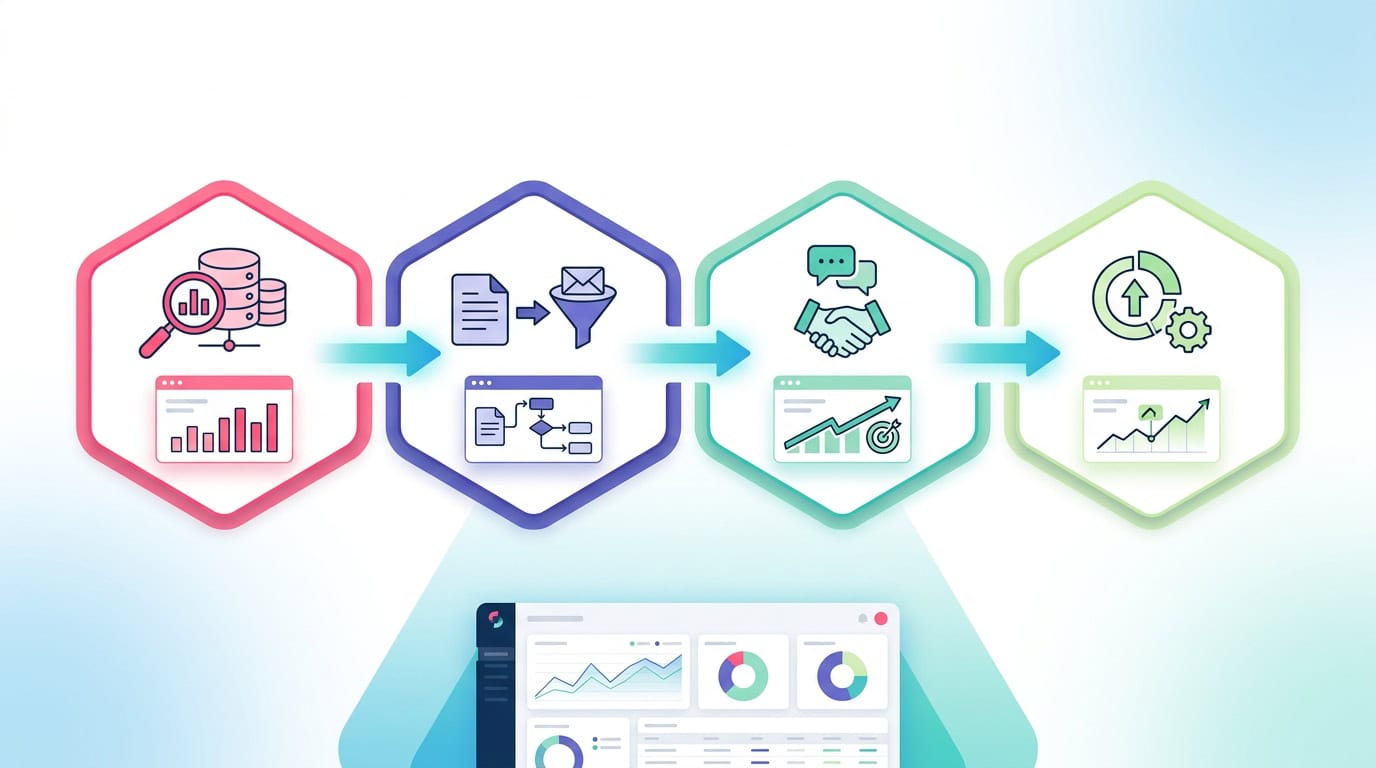
Below is the practical framework we use with clients through the Digileads Sales Module. It’s built around four core pillars that, when implemented together, create a measurable improvement in pipeline quality and close rates.
Step 1 — Define Your Ideal Customer Profile and Lead Qualification Criteria
Before you can enable your sales team, you need to be precise about who they’re selling to. This starts with a clearly defined Ideal Customer Profile (ICP) — not a vague persona, but a specific description of the companies and contacts most likely to buy, onboard successfully, and stay.
From your ICP, you build your lead qualification criteria. We recommend using a framework such as BANT (Budget, Authority, Need, Timeline) or MEDDIC for more complex enterprise sales, but the specific model matters less than the discipline of applying it consistently.
- Budget: Does the prospect have the financial capacity to buy?
- Authority: Are you speaking to decision-makers, or are you stuck at gatekeeper level?
- Need: Is there a genuine, urgent problem your solution solves?
- Timeline: Is there a realistic buying window, or is this a long-term speculative conversation?
When qualification criteria are applied at the top of the funnel, your reps spend their time on opportunities that are genuinely worth pursuing. This single change can have a dramatic effect on conversion rates and team confidence.
Step 2 — Build CRM Adoption That Actually Sticks
A CRM that isn’t used properly is worse than no CRM at all. It creates false pipeline visibility, unreliable forecasting, and a data environment that nobody trusts. CRM adoption is one of the most common failure points in any sales process improvement initiative.
The key to making CRM adoption stick isn’t enforcement — it’s design. Your CRM should reduce admin, not create it. Every field, stage, and workflow should have a clear purpose that makes the rep’s job easier.
Practical steps to improve CRM adoption:
- Audit your current CRM setup and remove any fields or stages that serve reporting rather than selling.
- Map your actual sales process into the CRM — not an idealised version of it.
- Automate data capture wherever possible, reducing manual input.
- Make pipeline reviews a CRM-native activity so that reps see real value in keeping it accurate.
- Train managers to coach from CRM data, reinforcing its importance without making it feel punitive.
The Digileads Sales Module integrates directly with your CRM environment to automate key data points and ensure your pipeline reflects reality rather than optimism.
Step 3 — Implement Automated Nurture Sequences
Not every lead is ready to buy today. In B2B sales, the buying cycle can span weeks or months, and a common mistake is handing unready leads to sales too early — burning goodwill and wasting rep time — or losing touch with them entirely and letting competitors fill the gap.
Automated nurture sequences solve this problem by maintaining consistent, relevant contact with prospects who aren’t yet sales-ready, without requiring manual effort from your team. When done well, nurture sequences warm prospects through educational content, case studies, and timely outreach until they reach a qualification threshold that triggers a sales handoff.
Key principles for effective nurture sequences:
- Segment by behaviour and intent: A prospect who has read three blog posts and attended a webinar needs different content than one who opened a single email six weeks ago.
- Lead with value: Every touchpoint should give the prospect something useful — an insight, a framework, a relevant example — rather than simply asking for a meeting.
- Set clear handoff triggers: Define the specific actions or lead scores that indicate sales-readiness, and automate the handoff so nothing falls through the cracks.
- Review and optimise regularly: Nurture sequences aren’t set-and-forget. Monitor open rates, click-through rates, and conversion to meeting to identify where prospects are dropping off.
Step 4 — Align Sales and Marketing Around Shared Goals
Sales-marketing misalignment is one of the most damaging — and most common — problems in B2B businesses. Marketing generates leads that sales considers unqualified. Sales ignores content that marketing has invested in creating. Each team blames the other for missed targets. The result is a dysfunctional pipeline and a culture of internal friction.
A mature sales enablement strategy forces alignment by creating shared definitions, shared goals, and shared accountability.
How to achieve genuine sales-marketing alignment:
- Agree on a shared definition of a qualified lead. Marketing needs to know exactly what sales considers a viable opportunity, and that definition must be documented and agreed — not assumed.
- Create a Service Level Agreement (SLA) between teams. Marketing commits to delivering a defined volume and quality of leads. Sales commits to following up within a defined timeframe. Both sides are held accountable.
- Run regular joint pipeline reviews. Bring sales and marketing leaders into the same conversation about what’s working, what isn’t, and where the funnel is leaking.
- Use content strategically in the sales process. Marketing should be creating assets that sales can use in active deals — not just top-of-funnel awareness content. Case studies, ROI calculators, and competitive battle cards are all examples of content that directly supports sales conversations.
When sales and marketing operate from the same playbook, lead quality improves, conversion rates rise, and the entire revenue function becomes more predictable.
How to Enable Your Sales Team: Putting It All Together

Knowing how to enable your sales team is one thing — executing it consistently is another. The framework above works, but only if it’s implemented as an integrated system rather than a collection of disconnected initiatives.
The businesses that see the strongest results are those that treat sales enablement as an ongoing operational discipline, not a one-off training programme. They review their qualification criteria quarterly, audit their CRM data monthly, test new nurture sequences regularly, and hold sales-marketing alignment meetings as a standing commitment — not a crisis response.
The Digileads Sales Module is built to support exactly this kind of systematic approach. It combines lead generation, qualification automation, CRM integration, and nurture sequencing into a single platform designed specifically for mid-market B2B sales teams. Rather than stitching together multiple tools and hoping they talk to each other, you get a cohesive system that reflects how your sales process actually works.
Sales Process Improvement Is a Competitive Advantage

In competitive B2B markets, the businesses that invest in sales process improvement pull ahead — not because they have more budget or bigger teams, but because they use what they have more effectively. A well-enabled sales team outperforms a larger, under-supported one almost every time.
The question isn’t whether you can afford to build a proper sales enablement strategy. It’s whether you can afford not to — particularly when your competitors are already doing it.
For a deeper look at the specific improvements a structured enablement approach delivers, take a look at our dedicated resource: how sales enablement will improve your sales team.
Ready to Build a Sales Enablement Strategy That Delivers?
If your team is missing targets, struggling with lead quality, or operating without a consistent process, the Digileads Sales Module gives you the infrastructure to change that — quickly and sustainably.
Book a discovery call with our team today and we’ll show you exactly where your current sales process is losing deals, and how a tailored sales enablement strategy can fix it.