

AI Overviews now appear at the top of Google’s search results for many questions. This is changing how people find information online. Knowing how to optimise for AI Overviews is very important for modern SEO. It requires a different approach compared to traditional featured snippets.
What Are AI Overviews?
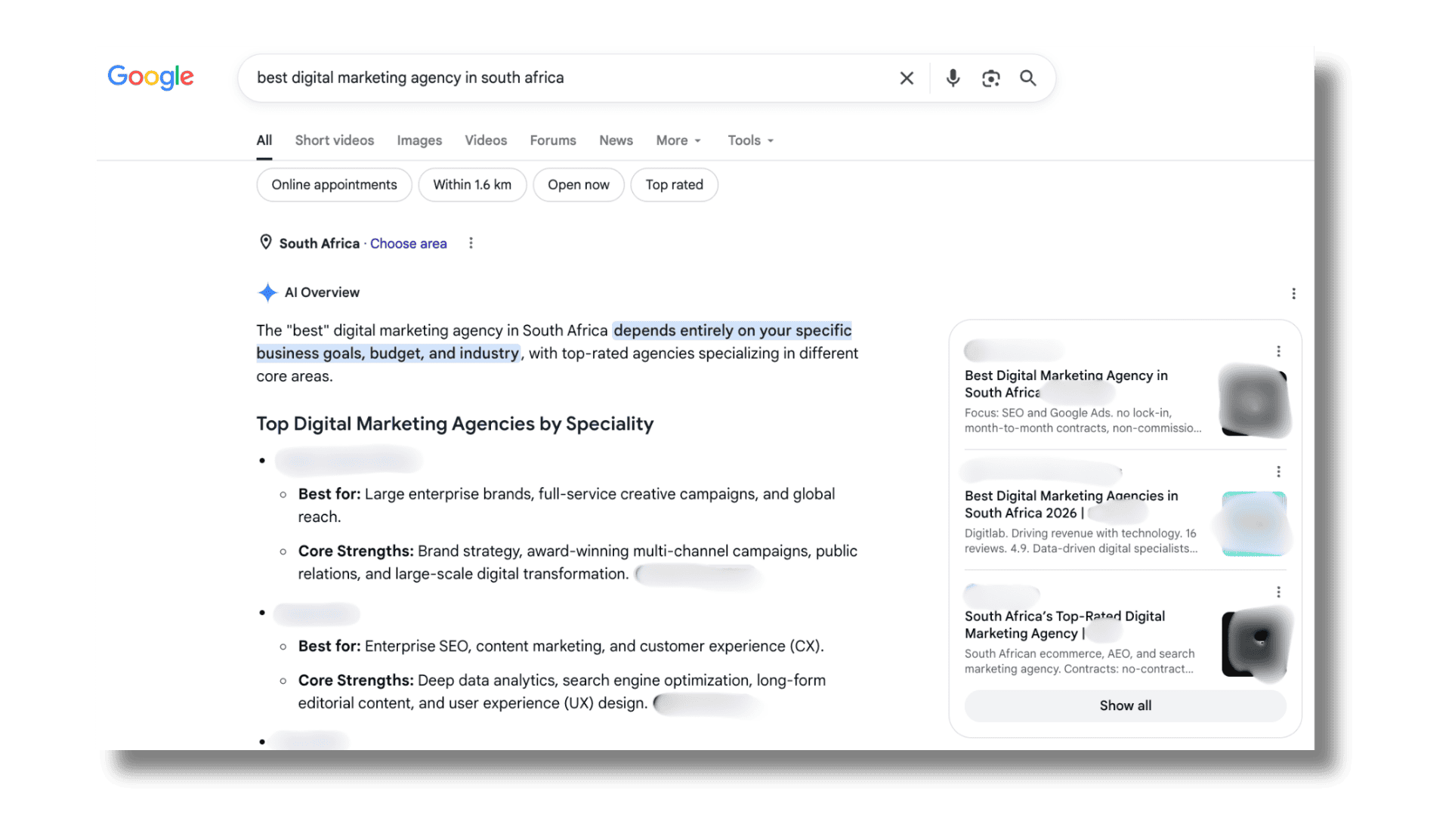
Google’s AI Overviews are AI-generated summaries at the top of search results. They take information from several websites, combine it into a clear answer, and link to the original sources. Getting featured in an AI Overview puts your brand right in front of users before they even click a link.
This is important because AI Overviews are not just a new version of featured snippets. Featured snippets take one block of text from a single page. AI Overviews build an answer from multiple sources. They choose content based on how clear, relevant, and trustworthy it is. Optimising for one without understanding the other is a waste of time.
How to Optimise for AI Overviews: A Step-by-Step Process
Step 1: Lead with a Direct Answer
Google’s AI systems look for clear and useful answers. If you hide your main point deep in the text, you probably will not be chosen. Every piece of content that answers a question should start with a clear sentence that gives a direct answer.
For example, if your topic is “what is lead generation,” your opening sentence should define it clearly. Do not use vague words. Think of it as writing for someone who might only read one sentence. That sentence needs to explain everything.
This shows Google that your page is confident, reliable, and easy to understand. All these qualities help you appear in AI Overviews.
Step 2: Use Clear Headings
AI systems read your headings to understand your content. A good heading structure tells Google exactly what each section is about. Use H2 headings for big topics and H3 headings for smaller details.
Avoid vague headings like “More Information.” Instead, write headings as questions or clear statements. Use the kind of words people type into a search bar. This helps the AI match your content to the right search query.
Step 3: Write Short, Easy-to-Extract Definitions
AI Overviews often use short definitions. These are clear explanations that make sense on their own. Whenever you introduce a new idea, include a one or two-sentence definition.
These definitions should avoid confusing jargon and use plain language. Make sure to include the keyword you are defining. If you are writing about AI Overviews SEO, define the term clearly and early on. This means an AI system can easily copy that text and use it without needing the rest of the paragraph.
Step 4: Build Topic Authority with Content Clusters
Google wants to see that you are an expert on a topic before it uses your content in an AI Overview. One good article is rarely enough. Your website needs to show deep knowledge across a whole subject.
This is where content clusters help. A “pillar page” covers a big topic in a broad way. Then, smaller “cluster pages” explain specific details and link back to the pillar page. Together, they show Google that your website is a true expert on that subject.
Step 5: Get Links from Trusted Sources
AI Overviews rely on trust. Google prefers to use content from websites that other trusted websites link to. Getting backlinks from respected sites is one of the best ways to improve your SEO.
Focus on quality over quantity. A few links from famous industry blogs or news sites will help you much more than lots of low-quality links. Writing guest posts and doing digital PR can help you earn these important links.
Step 6: Format Content for Easy Reading
Your formatting should make it easy for AI to find your best points. Helpful formatting choices include:
-
Bulleted and numbered lists for steps or comparisons.
-
Short paragraphs of two to four sentences.
-
Bold text to highlight important keywords.
-
FAQ sections that answer common questions.
-
Summary boxes that repeat your main points.
These elements make it easier for an AI system to pull useful facts from your page. When your content is easy to read, it becomes a more reliable source.
Step 7: Strengthen Your E-E-A-T Signals
E-E-A-T stands for Experience, Expertise, Authoritativeness, and Trustworthiness. Google uses these to judge if your content is high quality. AI Overviews choose sources with strong E-E-A-T, which means your content must show real expertise.
You can improve your E-E-A-T by listing real authors with real credentials. You should also publish original research, keep your “About” page updated, and make sure your website is secure. These details build trust with Google.
Common Mistakes That Will Hold You Back
Over-Optimising for Keywords
Do not stuff your content with keywords just to get into an AI Overview. AI systems know when you write for search engines instead of real people. Always write naturally. Keyword placement should feel normal.
Ignoring E-E-A-T Signals
A big mistake is thinking you only need to change your formatting. If your site does not have credible authors, has old content, or looks untrustworthy, formatting will not save you. E-E-A-T is necessary for success.
Confusing AI Overviews with Featured Snippets
This is a very common misunderstanding in SEO today. Featured snippets reward one small block of text from a single page. AI Overviews reward deep knowledge, authority, and trust from multiple pages. A page that wins a featured snippet might not show up in an AI Overview at all.
Forgetting About Internal Links
Publishing articles without linking them together hurts your authority. If Google cannot see how your pages connect, it will not see you as an expert. Every new article should link to older, related pages on your site.
The Bigger Picture: AI Overviews in Your Strategy
Appearing in AI Overviews takes time and consistent effort. Businesses that succeed will focus on true expertise, build trust, and format their writing clearly.
The good news is that these rules are not entirely new. Being helpful, clear, and trustworthy has always been the key to good SEO. The difference now is how carefully you apply these rules.
Doing this well brings great rewards. Good content performs well in AI Overviews, normal search results, and on social media.