

If your content isn’t generating consistent organic traffic, converting visitors, or building authority in your niche, the problem might be direction. Knowing how to do a content gap analysis properly is the starting point for any content strategy that actually delivers results. It’s the process of identifying the questions, topics, and search queries your target audience is actively looking for that your current content fails to address. Done well, it transforms guesswork into a clear, prioritised roadmap. Done poorly, it leaves you publishing content that competes with itself, chases the wrong audiences, or misses entire segments of buyer intent.
This walkthrough covers every step of the process, from pulling raw data out of Google Search Console to building a content calendar that fills the gaps strategically. Whether you’re doing this in-house or preparing a brief for an agency, this is the framework that matters.
Step 1: Export Your Current Keyword Rankings from Search Console
Before you can identify what’s missing, you need a clear picture of what you already have. Google Search Console is your first port of call. Navigate to the Performance report, set the date range to the last three months (or six months for slower-moving sites), and export the full query data. You’ll want impressions, clicks, average position, and CTR for every query your site appears for.
This export is the raw material for your gap analysis. It tells you not just where you rank, but where you almost rank, which is where the real opportunity sits.
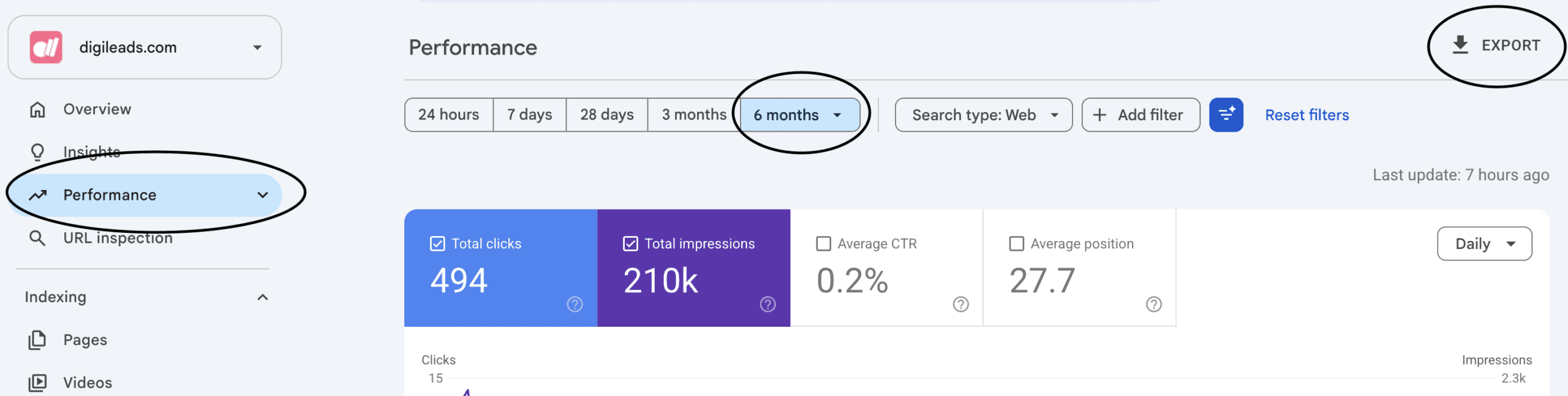
Identify Queries Where You Appear But Don’t Rank in the Top 10
Filter your exported data to surface queries where your average position is between 11 and 30. These are the terms where your site is visible enough for Google to serve it, but not prominent enough to drive meaningful traffic. Many businesses overlook this segment entirely, focusing only on their top performers.
This middle ground is often the fastest-win territory in a content gap analysis. You’re already on Google’s radar for these queries, the content exists, the page is indexed. What’s missing is depth, authority, or relevance. A targeted refresh or expansion of the existing page can move it into the top 10 far more quickly than building a new page from scratch.
Step 2: Run a Competitor Content Audit to Find Content Gaps
Your own data tells you what you rank for. Your competitors’ data tells you what you should be ranking for. This is the competitor dimension of a content gap analysis, and it’s where you’ll typically uncover the most substantial opportunities.
Use a tool such as Ahrefs or Semrush to run a content gap or keyword gap report. Input two or three of your closest organic competitors and compare their ranking keyword sets against yours. The output will show you topics and queries they’re capturing traffic for that your site doesn’t appear for at all.
What to Look for in Competitor Content Audits
Don’t just look at which keywords competitors rank for, look at how they’re ranking. Are they using dedicated landing pages, long-form guides, comparison articles, or FAQ content? The format matters as much as the topic. A competitor ranking with a 3,000-word pillar guide signals that a thin 600-word post from you won’t compete, no matter how well it’s optimised.
Pay particular attention to:
- Topic clusters your competitors have built that you haven’t touched
- Product or service comparison queries where you’re absent but competitors are present
- Local or industry-specific queries relevant to your audience that your site ignores
- Question-based queries (how, what, why, which) that map to informational search intent
Building topical authority requires consistent, comprehensive coverage of your subject area. If you want to understand how that connects to your overall content gap work, our guide on how to build topical authority is essential reading alongside this walkthrough.
Step 3: Map Content Gaps to Buyer Journey Stages
Not all content gaps carry the same strategic value. A gap in awareness-stage content, the informational articles that introduce someone to a problem, serves a different purpose than a gap in decision-stage content, where someone is actively comparing solutions before purchasing.
Once you have your list of missing topics, categorise each one by buyer journey stage:
- Awareness: The prospect recognises a problem but isn’t yet solution-aware. Queries tend to be broad and informational — “why is my website traffic dropping” or “what is lead generation”.
- Consideration: The prospect is evaluating approaches and solutions. Queries become more specific — “content marketing vs paid ads”, “best CRM for small businesses”.
- Decision: The prospect is close to buying. Queries are transactional or comparison-driven — “Digileads review”, “SEO agency pricing”, “hire a content strategist”.
A healthy content strategy covers all three stages. Many businesses find they’re heavily weighted towards awareness content, blog posts, educational guides, with very little at the consideration or decision stage. This creates a pipeline that attracts visitors but fails to convert them because the content never guides them towards a choice.
Step 4: Prioritise Gaps by Search Volume and Commercial Intent
With a mapped list of content gaps in hand, the next content gap analysis step is prioritisation. You can’t fill every gap at once, and attempting to do so dilutes your focus and stretches your resources.
The Two Variables That Matter Most
Search volume tells you how many people are looking for a given topic each month. Higher volume means greater traffic potential, but also, typically, greater competition. Don’t chase volume alone.
Commercial intent tells you how likely a searcher is to become a customer. A query like “how to generate B2B leads” carries strong commercial intent even if it looks informational, someone asking that question is likely evaluating whether they need help and what their options are. Whereas a query like “what is a content management system” may have high volume but low commercial relevance if your business doesn’t serve that audience.
Score your gap list by combining both variables. High volume with strong commercial intent gets prioritised. Niche topics with low volume but very high purchase intent, think branded comparison queries or specific use-case searches, often punch well above their weight and should sit near the top of your content calendar.
Step 5: Build a Content Calendar to Fill the Gaps
Analysis without execution is just a spreadsheet. The final step is converting your prioritised gap list into a structured content calendar that assigns topics, formats, deadlines, and owners.
Structure your calendar around a realistic publishing cadence. For most businesses, two to four pieces of quality content per month is more effective than eight rushed pieces. Consistency and depth outperform volume every time.
Tips for Building a Gap-Led Content Calendar
- Group related topics together so you build topical clusters rather than isolated posts
- Alternate between decision-stage and awareness-stage content so you’re always filling the top and bottom of the funnel simultaneously
- Flag existing pages that need refreshing separately from net-new content — they often deliver results faster
- Assign a primary keyword, secondary keywords, and target word count to each calendar entry before briefing writers
- Review the calendar quarterly to account for shifts in search trends, new competitor activity, or changes in your product offering
Common Mistakes to Avoid When You Do a Content Gap Analysis
The process is straightforward in theory, but there are several recurring mistakes that undermine the results in practice.
Confusing Keyword Gaps with Content Gaps
A keyword gap shows you a term you don’t rank for. A content gap shows you a topic or question your audience needs answered that you haven’t addressed. These are related but not identical. Treating every unranked keyword as a separate content gap leads to a bloated, fragmented site with dozens of near-duplicate pages competing against each other. Always look at the topic behind the keyword, not just the keyword itself.
Over-Prioritising High-Volume Terms
High search volume is seductive. But a page targeting a broad, competitive term with weak commercial relevance will take months or years to rank — and may never convert visitors into customers even if it does. Prioritise relevance and intent alongside volume. A well-targeted page for a niche, high-intent query will consistently outperform a vague, high-volume page in terms of business results.
Failing to Audit Existing Content Before Creating New Pages
This is one of the most costly mistakes in content strategy. Before publishing anything new, conduct a content audit of what you already have. Many businesses find they have pages that partially address a gap but need expanding, pages that were never properly optimised, or multiple pages cannibalising each other for the same queries. Creating new content on top of an unaudited foundation compounds the problem rather than solving it. Always audit first, create second.
Turn Your Gap Analysis Into a Growth Strategy
A content gap analysis is not a one-time exercise. Your competitors are publishing, search behaviours shift, and your own product or service offering evolves. The businesses that build consistent organic growth treat this as a quarterly discipline, not a one-off project.